Solution for AV System Construction in Sports Centers
I. Industry Background
With rising living standards, China has attached growing importance to national physical fitness. Physical fitness serves as the foundation for all-round social development, and mass sports are an essential pillar driving economic growth and social advancement. Since the issuance of the Central Government’s 2007 guideline on enhancing public sports and national physical health, alongside relevant policies proposed at the Third Plenary Session of the 18th CPC Central Committee to boost physical exercise and improve public physical and mental wellbeing, national authorities have continuously prioritized school physical education and urban public fitness infrastructure. As core venues for athletic activities, sports stadium construction has gained strong policy support nationwide.
Sports venues symbolize national emphasis on public fitness and mark the modernization and cultural development of cities, laying solid foundations for local sports industry growth and encouraging citizens to build regular workout habits for improved physical wellness. Hishico boasts rich engineering experience in stadium projects ranging from Grade C to Grade A & A-level sports arenas. Customized solutions are designed in line with venue functions and local budget to fully satisfy public fitness requirements.
II. Project Requirements
Modern sports complexes function as multi-purpose sites for athletic competitions, large-scale assemblies and commercial concerts. Built upon digital and intelligent frameworks, they feature intelligent, network-based, scientific and humanized management attributes. Leveraging cloud computing, IoT, smart terminals and next-gen mobile communication technologies across ubiquitous communication, internet and IoT networks, PC & portable smart terminals deliver secure, user-friendly spaces for sports training, tournaments and daily administration. The high-tech integrated management platform streamlines daily operation with higher efficiency and human-centric control.
1. Optimize overall design for cost-effective deployment with advanced, reliable and high cost-performance system configuration to cut unnecessary investment costs.
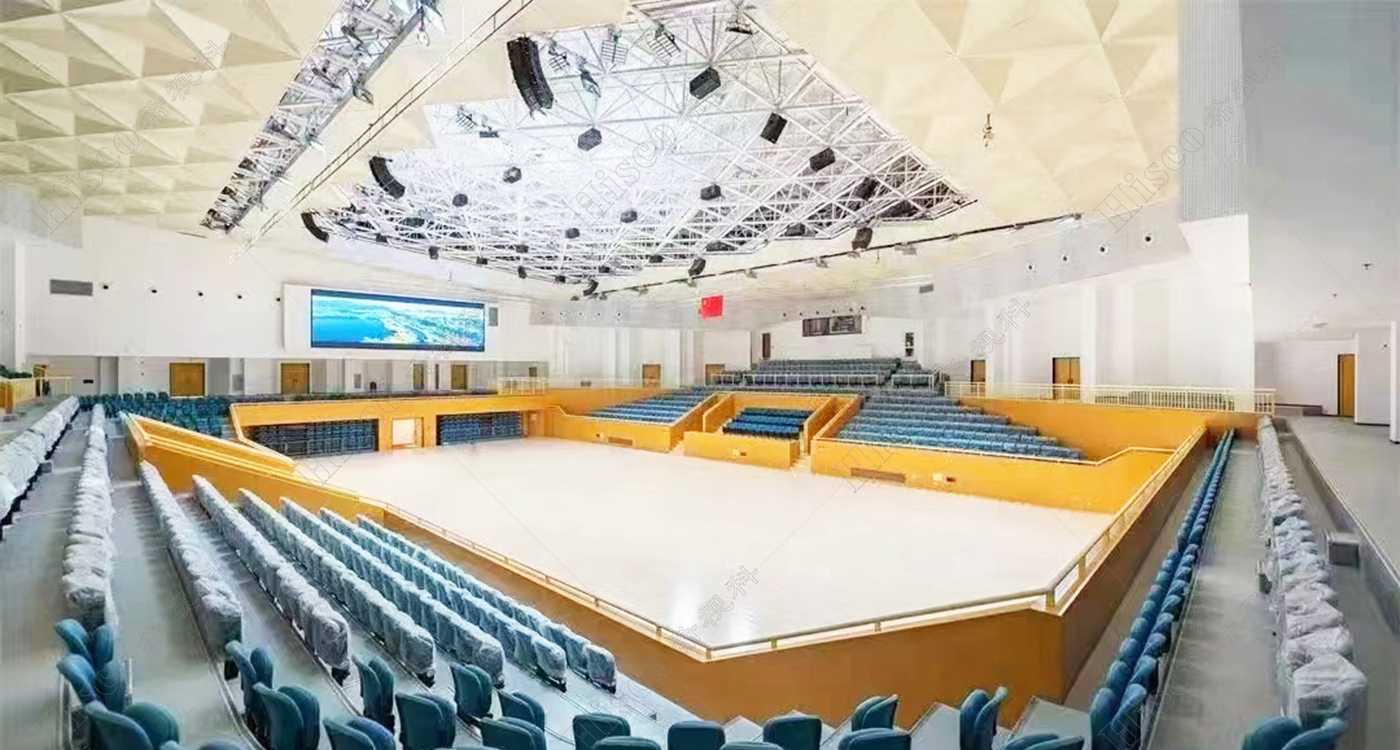
2. Interior acoustic finishing conforms to standard gymnasium specifications to ensure full, intelligible speech reproduction, consistent sound intensity and uniform acoustic distribution throughout all spectator zones.
3. Given large enclosure volume and long reverberation time inside the arena, the PA system shall comply with five national electro-acoustic acceptance criteria including speech intelligibility, acoustic transmission gain, maximum sound pressure level, sound field uniformity and system frequency response plus signal-to-noise ratio after qualified architectural acoustic treatment.
4. On-site video system is configured based on viewing distance from spectator stands to LED screen, meeting requirements for live & recorded program production by TV and radio broadcasters.
5. Professional lighting setup satisfies competition standards on illumination intensity, color temperature uniformity, light refraction and color rendering index for specialized tournaments.
6. Online venue reservation system is developed complying with big-data internet operation standards for modern leasing management.
7. Digital signage system fulfills site navigation and categorized real-time information release demands.
8. Match clock, timing & scoring and access ticketing systems strictly follow relevant national industry standards.
V. Design Solution for Stadium Public Address System
Stadium PA design varies by venue type including football, basketball, natatorium, diving, tennis, athletics and ice hockey arenas plus multi-function halls with distinct acoustic characteristics. Core PA functions cover: 1. Clear voice reinforcement for sports tournaments and large gatherings; 2. Full-range sound reproduction for opening/closing ceremonies and theatrical performances; 3. Redundant backup system plus on-site centralized control architecture.
Large enclosed stadiums feature long reverberation which easily causes muddy sound reproduction. To deliver crisp natural audio to audiences, the PA layout maximizes direct sound coverage by shortening speaker-to-listener distance and minimizing reflected sound, echo and flutter echo interference. Fewer sound source clusters are adopted to guarantee stable sound pressure, superior speech intelligibility, even sound field and full-frequency audio restoration.
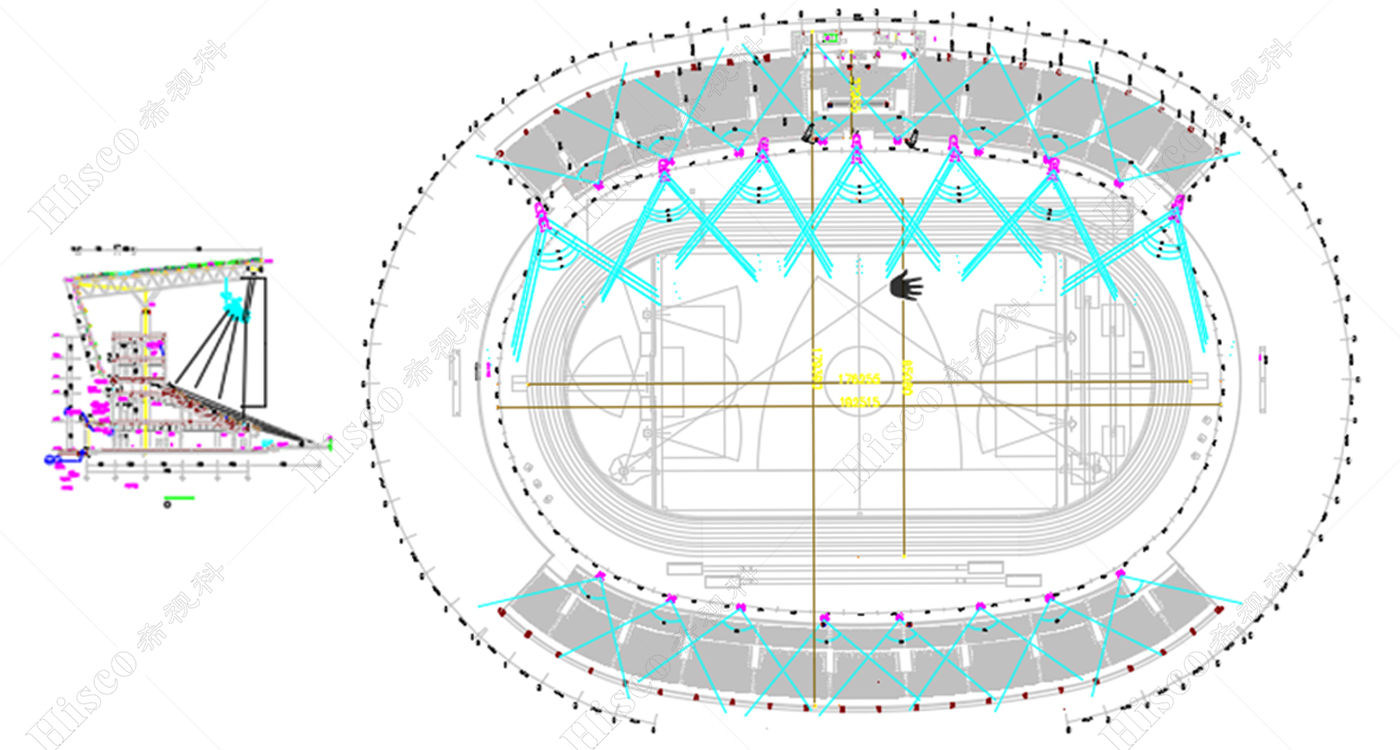
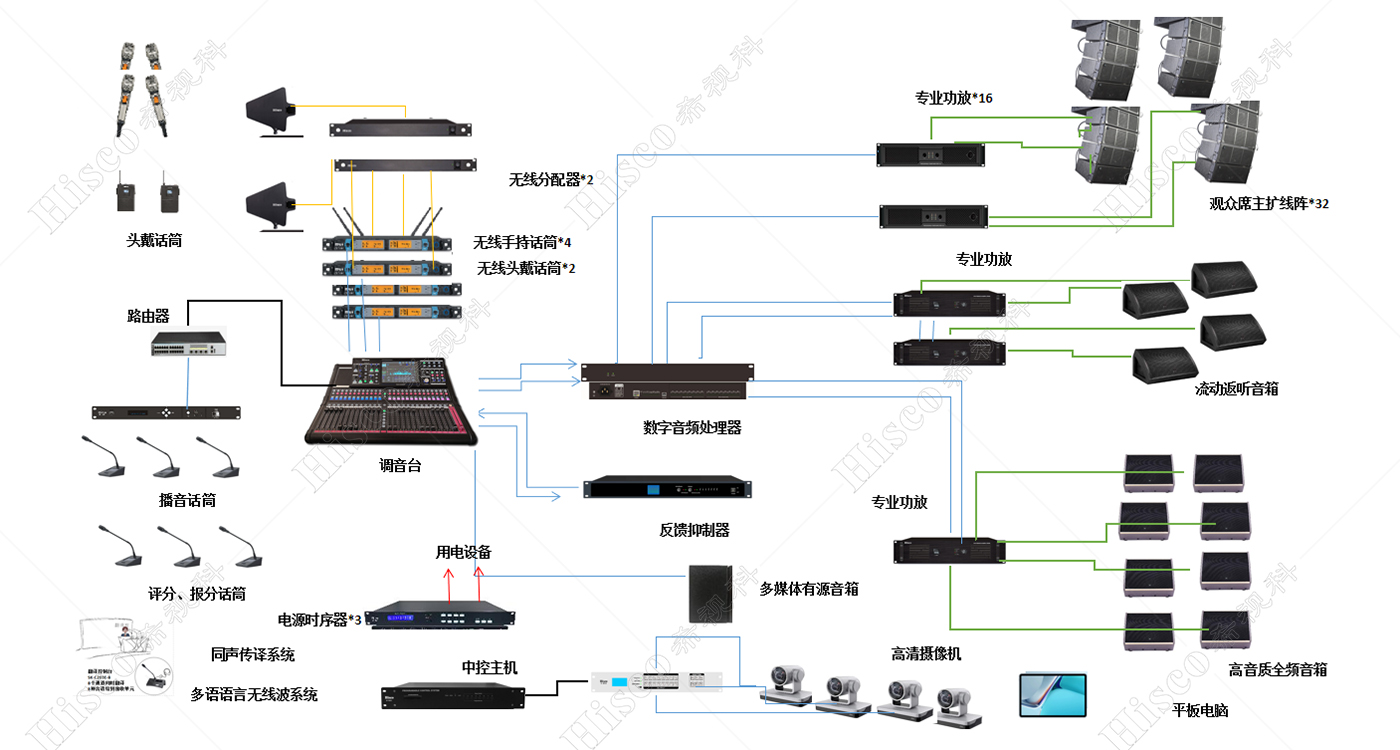
The venue contains four tiers of spectator seating with private suites on the second floor; horizontal span from east to west stands reaches around 240m, north-south width 250m, canopy height approx.55m and roof height 50m with 30m vertical clearance from top seating to ceiling. The whole PA system adopts networked architecture with full equipment redundancy to avoid total audio outage upon single device failure, implementing backup routing across signal chain: Source → Mixing Console → DSP Processor → Power Amplifier → Loudspeaker.
As the central control room sits remotely from field signal access points, stage box interfaces for mixing consoles are installed inside weak-current equipment rooms beside east & west entrance lobbies on ground floor. Hybrid wired & wireless microphones are equipped with abundant spare input ports; most audio sources originate from the podium and competition field with signal distribution reserved for central PA room and multiple live broadcast agencies.
Distributed loudspeaker layout is applied for homogeneous full-venue sound coverage. Based on acoustic attenuation and coverage calculation, 22 groups of SK-2010S line array speakers (8~14 cabinets per group) are suspended above spectator stands. Supplemental horn speakers are mounted under balcony eaves for semi-open second-floor suites, alongside 160 units of SW-306BC constant-voltage ceiling speakers installed underneath overhangs via high-voltage transmission. Another 10 groups of SK-2010S line arrays (8 cabinets per group) serve the central competition pitch.
Commentary booths are fitted with analog & network audio I/O terminals for local microphone, headphone connection, enabling on-site commentary and TV broadcast with flexible switching between venue PA and local feed, plus priority emergency fire broadcast cut-in function. Audio interconnection is available among separate commentary rooms for extended functional expansion. For international tournaments, a dedicated wireless FM broadcast system with fixed-frequency receivers is deployed with FM transmitters and antennas mounted on catwalks to deliver multi-lingual feeds for hearing-impaired visitors and overseas spectators.
Auxiliary listening systems and multi-channel receivers are also equipped for press tribunes and journalist workspaces.